Blog / Education

WNEU students visit the office

Published November 3, 2011 in Education, Staff, Ann Marshall, Elizabeth Morgan, Teaching

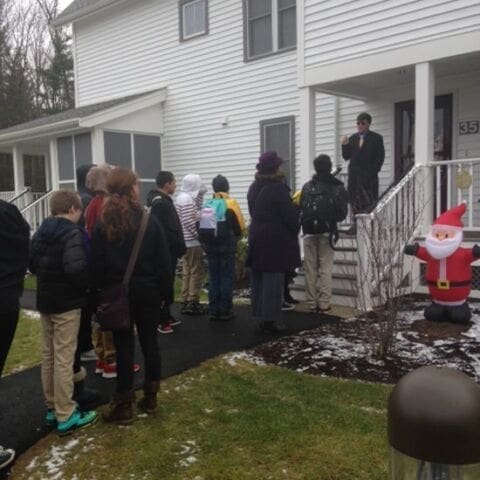
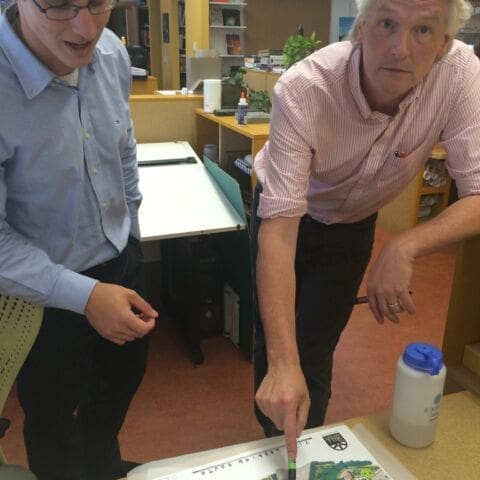
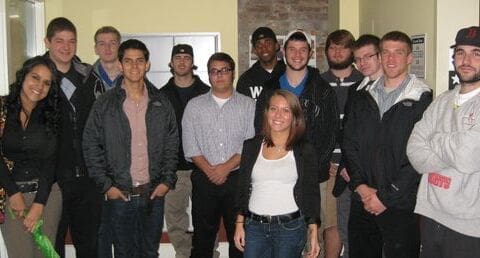
Western New England University Associate Professor of History Meri L. Clark brought her students to our office last week to learn more about our Machu Picchu project in Cusco, Peru. Michael Hanke from Design Division, the co-designer of the original exhibit, gave a wonderful presentation on the Incas in Peru and Hiram Bingham’s expedition to the remains of their ancient city. KRA's Ann Marshall and Elizabeth Morgan discussed the new design for the exhibit which recently celebrated its grand opening.

Make No Little Plans

Published September 19, 2011 in Education, KRA Extracurricular, Film, Staff, Andy Grogan, Jonathan Salvon, Teaching

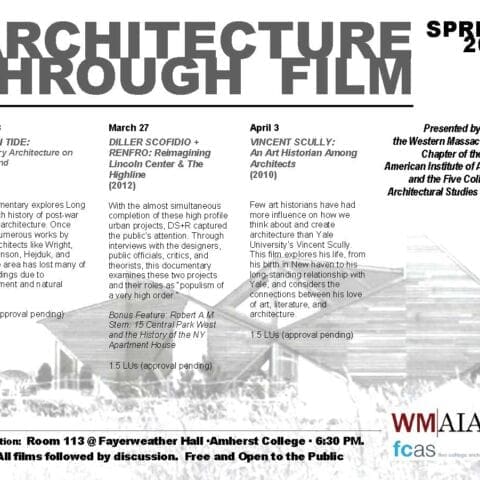
This semester's "Architecture Through Film" series begins Wednesday with Make No Little Plans: Daniel Burnham and the American City.  KRA's Jonathan Salvon will be introducing the film and leading discussion at the end.  The series is sponsored by WMAIA and the Five College Architectural Studies program.

Screenings begin at 6:30 pm in Pruyne Lecture Hall (Fayerweather Hall) at Amherst College.

Reduce, Reuse

Published September 9, 2011 in Education, Staff, Jonathan Salvon, Sarah Nolan, Sustainability

When it came time for the University of Massachusetts Amherst to renovate the Fine Arts Center Concert Hall, they had a decision to make: replace the existing auditorium seating with new chairs, or refurbish the existing chairs that had served them so well since the Fine Arts Center opened in 1975. As we assessed the options, the choice became clear.

The existing 2,023 seats were very high quality, as evidenced by their incredible condition after 35 years of use. With metal frames, simple and effective joinery, and mohair upholstery, they easily stood up to heavy use by both students and the community. Equally important, their clean lines fit the aesthetic of the hall itself.

New chairs, in contrast, were made primarily of plastic with bulkier profiles and a more expensive price tag. A decision for new chairs would also mean sending more than 2,000 functional existing chairs to the landfill. For this reason, the move to new chairs just didn’t sit right with anyone's sustainability initiatives. Refurbishing the existing seats, however, fit perfectly with the University’s efforts to conserve their resources, reduce their waste, increase their recycling, and build sustainably. 

The finishes for the refurbished chairs were carefully selected to meet performance criteria that are specific to theater design. Mohair fabric is especially durable in this setting, as its unique construction stands up well to crushing. We chose a matte black metal finish, rather than a satin or semi-gloss finish found in most furniture, so that the seats would not catch any of the stage lighting, thereby reducing distracting points of sparkle in the audience. Finally, we chose dark colored finishes so that the seats would “disappear” when the house lights went down, allowing all attention to be directed to its intended point—the stage.

By choosing to refurbish the existing chairs, the University was able to make a sustainable decision for the next generation that would use the chairs as well. They selected very high quality materials, so that the chairs will last long into the future. With new mohair upholstery, high density foam, and durable metal finish, the University is confident that the chairs will function beautifully for the next 35 years—an economically and environmentally sustainable move that they can feel good about. 

Will libraries endure?

Published September 6, 2011 in Education, KRA Extracurricular, Staff, Andy Grogan, Teaching

KRA's Andy Grogan is leading a studio this semester at Boston Architectural College in which students will explore the enduring idea of "the library," both as a public building and as a public institution.  The students' final project will be a design for a new public library in Holyoke, MA.

From the syllabus: With digital technologies challenging the traditional physicality of information and changing the connection of information to place, public libraries face many challenges to their traditional programs, and yet, as these challenges have emerged, library usage has increased.  How do libraries respond, innovate, and/or evolve in light of these changes?  How do you design an object for an idea that is changing but which also has endured through centuries?

The famous photo above, taken in September 1940, shows the remains of London's Holland House Library, the morning after a German air attack destroyed the building.

The Next Generation

Published July 18, 2011 in Education, Pro Bono, Staff, Aelan Tierney, Elizabeth Morgan, Teaching

The UMASS Pre-College Summer Design Academy  is open to students who have completed 8th grade through 12th grade and who are interested in design.  Working with practicing architects and UMASS faculty, they spend time designing furniture, rooms, buildings, and landscapes with a focus on the elements that are common to all design projects: space, light, structure, scale and site.

Last week, we were pleased to host them in our office as part of their Pre-Professional component in which students learn about applying to design programs for college, visit a construction site and an architect’s office, and find out how to put together a portfolio of their work.  KRA’s Aelan Tierney discussed how she became an architect and what it is that we do all day.  KRA’s Elizabeth Morgan showed the students around our office, a former movie theater that once served as stables for Amherst College.

Join them (and us!) on Facebook to see what students have been creating.